It’s no secret that electric vehicle technology has advanced at a pretty incredible pace in the last decade. Range anxiety is fading, charging speeds have improved, and EVs are now a practical choice for UK drivers and customers worldwide, encouraging millions to make the switch. Yet one core technology has remained largely unchanged: the traditional lithium-ion battery.
That may be about to shift…
A company called Donut Lab has recently announced what it claims is a production-ready solid-state battery. If validated at scale, this new battery technology could mark a meaningful step towards the next big thing in electric mobility.
We’re here for it.
Why solid-state battery technology matters
Unlike conventional lithium-ion batteries, solid-state battery designs replace the liquid electrolyte with a solid material.
There are lots of theoretical benefits for solid state batteries: higher energy density, faster charging capability, better safety features, and increased battery performance.
So what’s the challenge?
Well, put simply, it’s quite difficult to turn theory into reality, making it something that can be manufactured at scale with an affordable price point.
That’s what makes Donut Lab’s new battery claims so impressive…
They claim to deliver:
- Around 400 Wh/kg energy capacity and density
- Ultra-fast charging, potentially reaching full capacity in just five minutes in a single charge
- Dramatically extended design life with enhanced cycle performance
- Stable battery performance across extreme temperatures
- Reduced fire risk due to the absence of flammable liquid electrolytes, as opposed to traditional lithium-ion technology
But more importantly, they imply that the technology is already heading into production.
Verge Motorcycles has announced plans to integrate these solid-state batteries into their electric motorcycles, with other EVs expected to follow suit as the market matures.
The advantages for real-world use
For today’s EV drivers and fleet customers in the UK and beyond, solid-state batteries won’t suddenly appear in existing vehicles or at charging points overnight.
However, they reinforce a clear direction of travel for the EV industry and the world of electric mobility:
- Higher energy density, if achieved at scale, could mean lighter vehicles with longer ranges.
- Faster charging could bring EVs closer to the convenience of traditional refuelling, with some prototypes claiming to achieve a full charge in minutes
- Longer battery design life would improve sustainability and the overall economics of electric transport, whilst the use of geopolitically safe materials in solid-state battery production could help stabilise component supply chains and deliver more predictable pricing for manufacturers.
- Custom sizes and configurations mean solid-state battery technology could be adapted across various vehicle platforms, from electric cars to motorcycles and commercial vehicles, making the technology more versatile than many alternatives.
Production challenges and market reality
Bringing any new battery technology to market at scale is tough. Although there are theoretically lots of advantages to solid-state battery technology, there are also likely to be plenty of production hurdles and, as always, cost remains a critical factor – solid-state batteries would need to become a lot cheaper to produce before they can compete with their well-established lithium-ion forefathers on price.
To manufacture these batteries at the sort of volume needed to supply the growing EV market would require rather substantial investment in both product facilities and processes.
Manufacturers like Donut Lab would also need to demonstrate their claims that solid-state batteries can deliver consistent performance and efficiency in real-world conditions, not just laboratory settings, over time.
On a deeper level, manufacturers would need to consider component sourcing, quality control across different voltages and power outputs for an increasingly diverse market, as well as the ability to produce batteries that can rely on existing vehicle architecture if they want to make sure solid-state technology could become an affordable and accessible option for mainstream customers in future.
Why charging infrastructure still matters
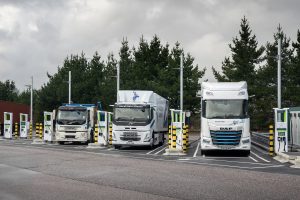
As battery technology improves, charging networks must evolve with them. Faster-charging electric vehicles require infrastructure that can deliver high power reliably, safely and intelligently, without placing unnecessary strain on the grid.
That’s why we focus on future-ready charging: grid-integrated, renewable-backed, and designed to support the next generation of EV technology and battery systems.
We’re building our charging points to accommodate vehicles with varying voltages and power requirements, ensuring that as solid-state batteries and other innovations reach the market, our infrastructure can be adapted support them.
The next big thing in electric mobility
Solid-state battery technology may still be emerging, but the direction is clear. The future of electric mobility will be faster, simpler and more resilient – and the charging experience needs to keep up to match.
Whether you’re driving an electric car today or waiting to see how the market develops, one thing is certain: advances in battery capacity, range, and charging speed will continue to make EVs a more compelling choice. And as the world moves towards cleaner transport, infrastructure providers like GRIDSERVE must be ready to deliver the power and efficiency that drivers rely on.
The switch to electric is accelerating. Solid-state batteries might only be one piece of the puzzle, but they remind us that in the world of EVs, standing still simply isn’t an option.
Solid-state battery FAQs
What is a solid-state battery?
A solid-state battery is a new battery technology that supposedly replaces the liquid electrolyte found in traditional lithium-ion batteries with a solid material. This design could offer several advantages, including higher energy capacity, faster charging times, improved safety, and better performance across extreme temperatures. Solid-state batteries are considered to be perhaps the next big thing in EV technology.
How fast can solid-state batteries charge an EV?
Solid-state batteries can apparently deliver ultra-fast charging capabilities, with some prototypes claiming to achieve a full charge in just five minutes. This faster charging performance would bring electric vehicles closer to the convenience of traditional refuelling, though real-world charging speeds would depend on the power supplied by the charger and cable used.
Are solid-state batteries safer than lithium-ion batteries?
It’s claimed that solid-state batteries offer improved safety compared to traditional lithium-ion technology. This is because they eliminate the flammable liquid electrolyte, supposedly reducing the risk of battery fires. This could make them a safer choice for electric cars, motorcycles, and other EVs, particularly in extreme conditions where conventional batteries typically pose higher safety concerns.
Which company is producing solid-state batteries for EVs?
Donut Lab has announced a production-ready solid-state battery that’s apparently being integrated into real vehicles. Verge Motorcycles is one of the first companies to adopt this technology for their electric motorcycles. Other EVs are expected to follow suit as production scales up and the technology becomes more affordable to the wider market.
What are the advantages of solid-state batteries over current lithium-ion batteries?
Solid-state batteries could offer multiple advantages: higher energy density for extended range, faster charging (potentially a full charge in just five minutes), longer design life with more charge cycles, stable performance across varying voltages and temperatures, the use of geopolitically safe materials in manufacturing, custom sizes for different vehicle applications, and improved efficiency. These benefits would make them ideal for electric cars, motorcycles, and other vehicles in the UK and worldwide.
How much do solid-state batteries cost?
Currently, solid-state batteries cost more to produce than conventional lithium-ion batteries. The price remains one of the biggest challenges for widespread adoption. However, as production volumes increase and manufacturing processes improve, solid-state batteries are expected to become cheaper and more affordable for mainstream customers over time.
When will solid-state batteries be available in electric cars?
Solid-state battery technology is claimed to already be entering production for Verge Motorcycles, with other EVs expected to follow. However, widespread availability in electric cars will depend on manufacturers’ ability to produce these batteries at scale, deliver them at an affordable price point, and integrate them into existing vehicle platforms.
What is the range of an EV with a solid-state battery?
Solid-state batteries could deliver significantly improved range compared to current lithium-ion batteries due to their higher energy capacity and density. The exact range will depend on the vehicle, battery size, and driving conditions, but the enhanced energy efficiency and reduced current drawn during operation should extend the distance EVs can travel on a single charge in real-world use.
What is the design life of a solid-state battery?
Solid-state batteries supposedly offer a dramatically extended design life compared to traditional lithium-ion batteries. They should be able to withstand many more charge cycles before degrading, which improves the long-term performance and reduces the overall cost of ownership. This extended battery life means customers could rely on their vehicles for longer before needing battery replacement.
Are solid-state batteries better for the environment?
Solid-state batteries could offer several environmental advantages. Their longer design life would mean fewer batteries needed to be produced over a vehicle’s lifetime. They could also be manufactured using geopolitically safe materials and component supply chains that are more sustainable. Additionally, their improved efficiency would mean less energy is required to fully charge them, reducing the overall environmental impact of electric vehicles.